The project perspectiveSpecify the vehicle or field environment, not just the display
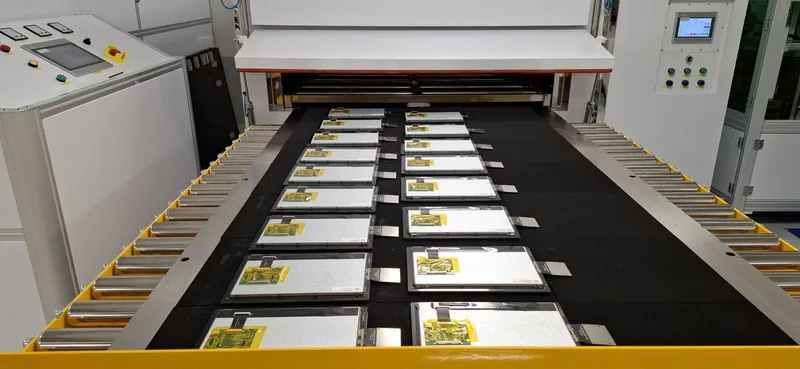
A conventional display, built with an air gap between cover glass and panel, is often the first component to show a problem in a vehicle or rugged handheld device. Optical bonding removes that air gap, turning the glass and the display into a single mechanical and optical unit. The achievable result still depends on the complete stack, the touch system and the enclosure.
Sunlight and glare
Direct sunlight in a cab or on a job site can wash out an unbonded display at exactly the moment a reading matters. Removing the internal air gap addresses one cause of the reflections involved; the full glass and coating stack still needs assessment.
Vibration and shock
Continuous vibration and occasional impact are normal in vehicles and rugged handheld devices. A bonded assembly is reviewed against the relevant shock and vibration profile rather than relying on a loose air gap.
Temperature range
Adhesive systems are selected for the required operating range and thermal cycling. The confirmed range depends on the complete material stack and is verified during qualification.
Explore this topic