Define the problem
Describe glare, fogging, touch behaviour or mechanical constraints. Share the display model and a drawing where available.
Turn a display requirement into an assessable project. Establish the optical stack, operating conditions and production expectations before choosing a bonding route.
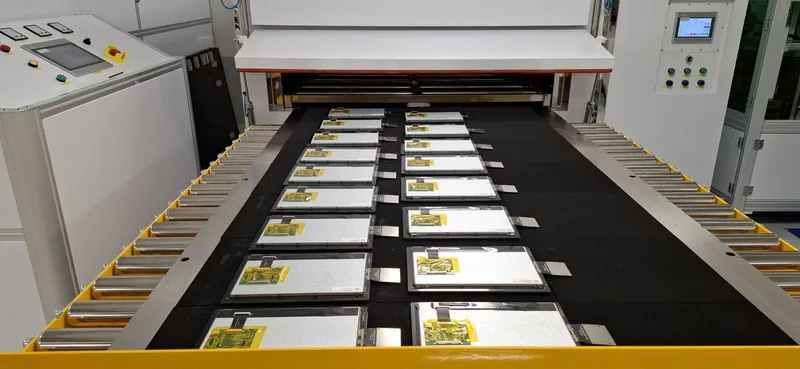
*Diagonal scope. Dimensions and stack suitability require technical assessment.
Whether the starting point is a new HMI or an existing display design, the first step is to understand the components and the problem. A technical review should establish compatibility, the appropriate adhesive route and what needs testing on a sample. Manufacturing arrangements, responsibilities and commercial terms are confirmed during project assessment.
Describe glare, fogging, touch behaviour or mechanical constraints. Share the display model and a drawing where available.
Review the display surface, sensor, glass, coatings and adhesive as one assembly. A size alone does not confirm compatibility.
Agree the sample scope and evaluation criteria before moving towards an intended production quantity.
A useful specification reduces uncertainty and gives the technical review a clear starting point.
Include its manufacturer, full model number and datasheet in your enquiry. Compatibility and handling are assessed before a project is accepted.
No. A sample can support evaluation, but the production route, testing and acceptance criteria need to be agreed separately.
Share the display details, the environment and the project timeline.
Discuss your project