Automotive & Rugged · Vibration, glare and temperature range

Optical bonding for automotive and rugged display projects

Vehicle and rugged handheld displays face sunlight, continuous vibration and a wide temperature range at the same time. Define the operating environment before specifying the front assembly.

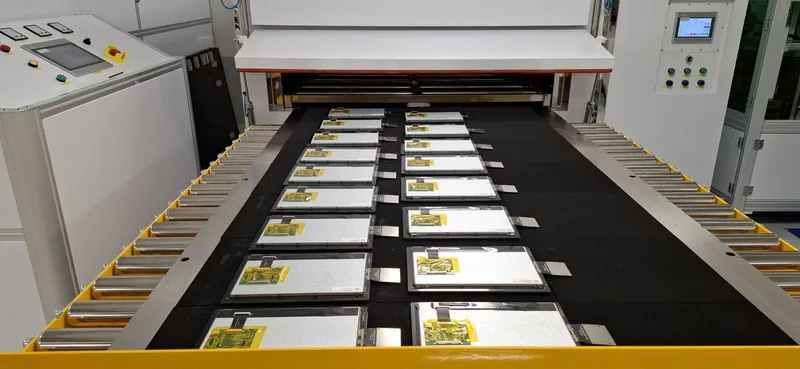
Electronic components on a production transport line
DISPLAY ENGINEERINGOPTICAL BONDING PRO
UP TO 59 INCHES*APPLICATION-LEDPROTOTYPE TO PROJECT PLAN

*Diagonal scope. Dimensions and stack suitability require technical assessment.

The project perspective

Specify the vehicle or field environment, not just the display

A conventional display, built with an air gap between cover glass and panel, is often the first component to show a problem in a vehicle or rugged handheld device. Optical bonding removes that air gap, turning the glass and the display into a single mechanical and optical unit. The achievable result still depends on the complete stack, the touch system and the enclosure.

Sunlight and glare

Direct sunlight in a cab or on a job site can wash out an unbonded display at exactly the moment a reading matters. Removing the internal air gap addresses one cause of the reflections involved; the full glass and coating stack still needs assessment.

Vibration and shock

Continuous vibration and occasional impact are normal in vehicles and rugged handheld devices. A bonded assembly is reviewed against the relevant shock and vibration profile rather than relying on a loose air gap.

Temperature range

Adhesive systems are selected for the required operating range and thermal cycling. The confirmed range depends on the complete material stack and is verified during qualification.

Explore this topic
Before the first review

What to put in your brief.

A useful specification reduces uncertainty and gives the technical review a clear starting point.

  • Vehicle or device operating environment and expected service life
  • Vibration, shock and thermal-cycling requirements
  • Touch operation with gloves or in wet conditions
Questions worth asking

Clear scope. Clear expectations.

Does optical bonding certify a vehicle to automotive standards?

No. We provide technical documentation to support your own qualification and type-approval process; certification and approval remain the responsibility of the vehicle or device manufacturer.

Can an existing rugged device be retrofitted with a bonded display?

Often, depending on the housing. Feasibility is reviewed case by case.

Your application. Your requirements.

Make the next step specific.

Share the display details, the environment and the project timeline.

Discuss your project