Incoming information
Identify models, drawings, materials and handling constraints. Note any missing or uncertain specifications.
Define what a good assembly must do before commissioning a sample. Optical appearance, touch response and environmental performance need explicit criteria.
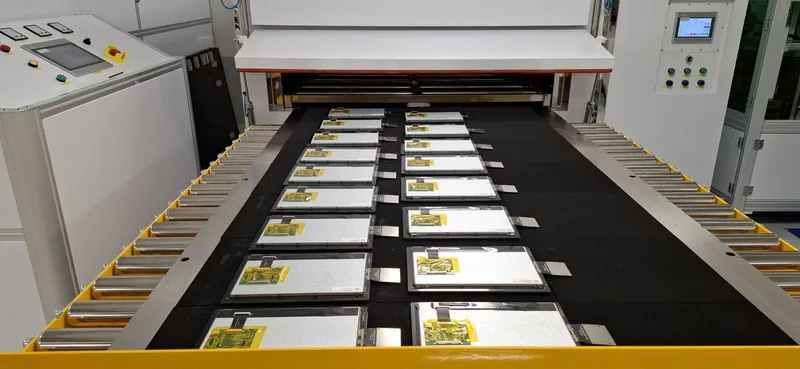
*Diagonal scope. Dimensions and stack suitability require technical assessment.
A useful assessment starts with component identification and the intended use. Sample acceptance might include visible-defect criteria, display operation and touch response. Environmental tests should follow the product brief. Test availability, records, tolerances and responsibilities must be agreed before they become a delivery commitment.
Identify models, drawings, materials and handling constraints. Note any missing or uncertain specifications.
Define the viewing conditions, defect criteria, display functions and touch behaviours to assess.
Specify relevant temperature, moisture, vibration or cleaning tests for the intended product.
A useful specification reduces uncertainty and gives the technical review a clear starting point.
No. Required evidence and available test arrangements are established for each project.
No. Product validation and manufacturing acceptance should be treated as separate, agreed activities.
Share the display details, the environment and the project timeline.
Discuss your project