Variable light conditions
Moving between tunnel darkness and open track or low sun can make an unbonded display briefly unreadable. Removing the internal air gap addresses one cause of that reflection.
Driver-cab instruments, passenger information screens and outdoor ticket terminals all have to keep working through tunnel-to-sunlight glare, continuous vibration and seasonal temperature swings.
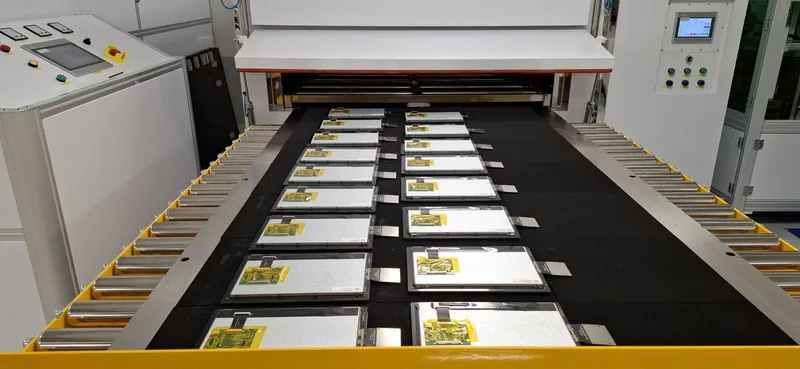
*Diagonal scope. Dimensions and stack suitability require technical assessment.
Moving between tunnel darkness and open track, or facing low sun at the end of a line, can make an unbonded display briefly unreadable. Continuous vibration from the track or road adds a second, mechanical risk. Optical bonding removes the air gap between cover glass, touch sensor and display, which can help address glare, vibration fatigue and condensation risk together.
Moving between tunnel darkness and open track or low sun can make an unbonded display briefly unreadable. Removing the internal air gap addresses one cause of that reflection.
Bonding the full stack together is reviewed for resistance to the sustained vibration typical of rail and road vehicles, reducing the risk of delamination over the working life of the vehicle.
Ticket machines and station terminals exposed to weather face repeated condensation cycles. Removing the air gap removes the space where condensate collects; the result for the whole unit still depends on housing and sealing.
Explore this topicA useful specification reduces uncertainty and gives the technical review a clear starting point.
A lower-modulus adhesive is often a good fit, since it can damp vibration and absorb stress during thermal cycling. The right choice depends on the stack and is reviewed per project.
Full-surface lamination can improve impact resistance in a similar way to laminated safety glass. For public-facing units, glass thickness and coatings are specified to the relevant risk.
Share the display details, the environment and the project timeline.
Discuss your project